Key Highlights
- Phuket is a popular digital nomad destination with tropical weather, reliable internet, a growing expat scene, and affordable living.
- Thailand’s Destination Thailand Visa (DTV) is specifically created for remote workers and digital nomads, offering 5 years validity and 180-day stays per entry (extendable once).
- Eligibility for DTV includes age 20+, remote work for a foreign employer, proof of income, a valid passport, and financial proof of 500,000 baht in savings for the past 3 months.
- Application for a DTV must be done outside Thailand via a Thai Embassy or e-Visa portal. It includes documentation, visa fee, and processing time that may take weeks.
- Dependents like spouse and children under 20 can apply with the main DTV holder but require separate documentation.
- You may exit and re-enter Thailand freely during the 5-year DTV validity without needing re-entry permits.
- Other digital nomad visa option: LTR Visa (Long-Term Resident Visa): For high-income foreign professionals earning USD 40–80k annually, with extended 10-year stay and work permit eligibility.
- Popular coworking spaces in Phuket include: Place Coworking (Chalong), Cocoworking Space (Soi Ta-iad), Let’s Work (Rawai), Denz Coworking Cafe (Kathu/Patong), Regus (multiple locations)
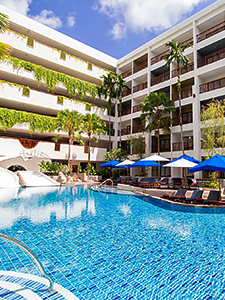
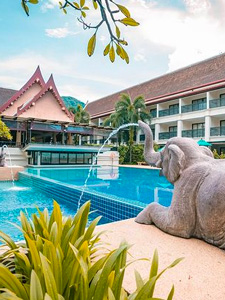
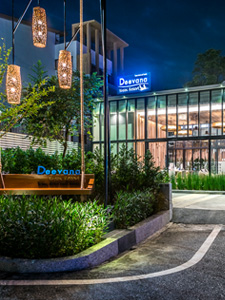
- Recommended accommodation: Deevana Hotels & Resorts have properties across central locations, offering work-friendly amenities, affordable rates, and accessibility to coworking hubs.
Considering a move to Phuket as a digital nomad? With the Destination Thailand Visa (DTV), Phuket for remote workers has become more accessible to global remote workers. If you’re a freelancer, tech specialist, creative, or entrepreneur looking to base yourself somewhere tropical, this guide will walk you through all you need to know about being a digital nomad in Phuket.
If you’re searching for the ultimate base to kickstart your journey in Phuket, Deevana Hotels & Resorts provides the ideal blend of comfort and convenience right in the heart of Phuket.
Why Phuket Appeals to Digital Nomads
So, is Patong, Phuket good for digital nomads? Absolutely – and it’s not hard to see why. Phuket, including the buzzing Patong area, combines year-round tropical weather, postcard-worthy beaches, and solid digital infrastructure with a thriving expat community that makes settling in feel effortless. Fiber-optic internet and 5G coverage are widely available, and a growing network of cafes and coworking spaces means you’re never far from a productive workspace. For anyone planning a long stay in Phuket, it remains one of Southeast Asia’s most rewarding and practical remote work bases.
Wondering about what is the cost of living for a digital nomad in Phuket in 2026? The cost of living in Phuket as a digital nomad is significantly lower than in most Western cities – local dining, coworking memberships, and long-stay accommodation are all available at a fraction of what you’d pay back home, without sacrificing comfort or convenience.
Understanding the Digital Nomad Visa
Thailand’s Destination Thailand Visa (DTV) is designed specifically for digital nomads and remote workers planning a long stay in Phuket or anywhere in Thailand, allowing extended visits without the hassle of constant visa runs. Applicants must show proof of remote income or foreign employment and financial evidence, such as a bank account with a minimum balance of 500,000 baht for the last three months.
Additional criteria include a valid passport, a clean background check, and meeting specific requirements depending on the purpose of your visit, such as working remotely (workcation) or participating in Thai soft power activities, like Muay Thai or Thai cuisine. The DTV allows for stays of up to 180 days per entry, with the option to extend for another 180 days. It’s a multiple-entry visa valid for five years.
How to Apply for the Digital Nomad Visa in Thailand
Step 1 – Check Your Eligibility
Before anything else, make sure you meet the core requirements:
- You must be at least 20 years old
- You should work remotely for a company based outside Thailand, be a freelancer with clients abroad, or run your own business offshore
- You must show adequate financial means
- Your passport must be valid for at least six months
Step 2 – Gather the Required Documents
You’ll need to prepare the application requirements, including, but not limited to:
- Passport, valid for at least six months
- Recent passport-style photo taken in the last six months
- Proof of current residence or location, such as a driving license
- Bank statement showing a bank balance of 500,000 baht (approximately USD 15,000) or more, for at least the past three months
- Proof of remote work, such as an employment contract, professional portfolio, or business registration if self-employed
- Health insurance may be required, and a clean criminal record may be requested
Always check with the specific Thai embassy or consulate you’ll apply at, as document requirements may vary slightly by location.
Step 3 – Submit the Application
- The DTV application is submitted outside Thailand; you can’t apply from within the country
- Apply at the Royal Thai Embassy or Consulate in your country of residence. Some embassies support online application (e-visa) processes
- Pay the application fee (around 9,000 to 37,000 baht).
- Wait for approval, which can take from a few days to weeks
Step 4 – Approval and Arrival in Thailand
- On arrival in Thailand, you’ll receive the visa entry stamp for up to 180 days
- You can extend your stay for another 180 days once during the 5-year visa period
- DTV holders are required to depart from Thailand and re-enter within the visa validity period
- Register your address within Thailand and follow the 90-day check-in procedure required by immigration
For dependents, including your spouse or children under 20, separate visa applications are usually required. It’s best to seek professional advice to ensure smooth processing.
Alternate Visa Option for Digital Nomads in Phuket, Thailand
While the DTV remains the primary route, Phuket for remote workers with higher income thresholds, has another compelling option:
Long-Term Resident (LTR) Visa
The LTR Work-From-Thailand Professional path is designed for foreign professionals, remote workers, and high-income earners working for overseas companies. It allows extended stays of up to 10 years and a work permit. Eligibility criteria include an annual foreign income of at least USD 40,000-80,000 for the past 2 years, health insurance coverage of at least USD 50,000, or proof of savings of at least USD 100,000. Remote workers need to be employed by a foreign company or have freelance income from abroad.
Best Places to Work Remotely in Phuket
Phuket has a growing selection of coworking spaces, including:
Place Coworking: A modern coworking space in Chalong, offering five floors of different workspace formats, from dedicated desks and shared workspace to meeting rooms at hourly, daily, weekly, and monthly rates.
Grind Time Cowork Space & Cafe: Located in Chalong and Rawai, it offers hot desks and station desks, meeting rooms, and phone booths, as well as fun spaces to relax and socialize.
Let’s Work: Offers coworking spaces located on the Rawai beachfront road, with comfortable interiors and regular business and social events geared towards digital nomads, business owners, and entrepreneurs.
Denz Coworking Cafe: This relaxing spot is located between Kathu and Patong, offering a serene workspace, tasty food, and breathtaking views of Patong Bay.
Regus: Offers several locations in Phuket, with customizable, serviced office space, coworking spaces, and virtual offices at flexible terms, including on-demand and memberships.

What Does It Cost to Live in Phuket as a Digital Nomad?
Cost of living is one of the first things remote workers want to know, and Phuket consistently delivers good value across all budget levels:
Budget lifestyle ($1,000 to $1,500/month)
- Private studio rental in Phuket Town or inland areas
- Meals at local markets and street food stalls
- Motorbike rental for getting around
- Hot-desk coworking membership
Mid-range lifestyle ($1,800 to $2,500/month)
- Furnished one-bedroom apartment in a central location
- A mix of local restaurants and casual dining out
- Dedicated coworking space with a monthly plan
- Ride-hailing apps or a personal motorbike
Premium lifestyle ($3,000 to $3,500+/month)
- Modern condo near the beach or in a gated development
- Regular dining at international restaurants
- Private car rental or frequent ride-hailing
- Gym memberships, wellness classes, and leisure activities
Across all lifestyles, utilities, a local SIM card with fast mobile data, and basic health insurance typically add under $150 per month. Compared to cities like London, New York, or Sydney, Phuket offers a significantly higher quality of life for a fraction of the cost, which is one of the strongest reasons it continues to attract remote workers from around the world.
Stay at Deevana Hotels & Resorts
If you’re starting your digital nomad life in Phuket, Deevana Hotels & Resorts offers a perfect base across the island, with properties located close to Old Phuket Town and along the coast in Patong. From the cultural charm of Phuket Town or the energy of a hotel in Patong, Phuket, there’s a Deevana property to match your lifestyle. Each location is accessible to coworking hubs, cafes, and key parts of the island – making it easy to make the most of your time.
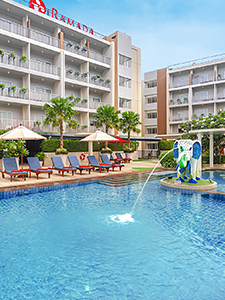
For digital nomads who need more than just a desk in their room, three Deevana properties come equipped with dedicated meeting room facilities: Deevana Plaza Phuket Patong, Ramada by Wyndham Phuket Deevana Patong, and Deevana Patong Resort & Spa. Enjoy thoughtfully designed spaces, complimentary Wi-Fi for productive remote work, swimming pools, a fitness room, and reception assistance. Of course, staying productive is only half the battle; managing your budget is the other.
When managing the cost of living in Phuket as a digital nomad, every baht counts. Joining the DHR Preferred Guest program is one of the smartest moves you can make before your first booking. Membership is free, and once you sign up, you’ll receive an exclusive discount code to use straight away – meaning savings from day one, not just return visits. Members enjoy up to 25% off room rates, a 30% discount at Orientala Spa, and 20% off dining, beverages, and laundry services across participating properties. Staying for a week or settling in for a season, the DHR Preferred Guest program makes your remote life in Phuket that much more rewarding.
Explore which area of Phuket suits you best, and let Deevana Hotels & Resorts be your base while you do.
References
- Destination Thailand Visa (DTV). Retrieved on 21 October 2025 from https://thaiconsulatela.thaiembassy.org/en/publicservice/dtv-visa
- Destination Thailand Visa (DTV) The Digital Nomad Visa. Retrieved on 21 October 2025 from https://dtv.in.th/
Frequently Asked Questions
Can I stay continuously in Phuket, Thailand, for the full five years of the DTV?
The visa is valid for 5 years, but each entry allows a stay of up to 180 days. You can extend once per entry (another 180 days) to maximize up to 360 days per entry. After that, you’ll need to depart and re‑enter.
Are my dependents (spouse/children) allowed to join me on the DTV?
Yes. Spouses and children under 20 can apply as dependents of the DTV holder. They must meet their own documentation requirements.
Can I work for a Thai company or get a Thai work permit on the DTV?
No. The DTV is for remote work for a foreign employer or those with freelance income from abroad. Working for a Thai‑based company or being employed locally will require a different visa with a work permit.
Am I taxed in Thailand under the DTV if I earn income abroad?
If you stay less than 180 days in a calendar year and your income is fully earned and retained overseas, you may avoid Thai tax. But if you stay more than 180 days, you may be considered a tax resident and liable for tax on foreign income.
How many times can I exit and re‑enter Thailand on the DTV without needing a re‑entry permit?
The DTV is a multiple‑entry visa, so you can leave and re‑enter during the 5‑year validity without needing a special re‑entry permit, as long as the visa remains valid.
What is the processing time and cost for the DTV?
Processing time depends on the embassy or consulate where you apply, but it may take several weeks. Fees vary by country (e.g., USD 400 in the US).
Is the DTV only for digital nomads?
The main target is digital nomads/remote workers. However, there are other eligible categories, including individuals engaging in Thai “soft power” activities like Thai cooking classes, Muay Thai training, or other cultural programs.
If I apply for the DTV and I’m already in Thailand on a tourist visa, can I convert it without leaving?
No. The DTV must be applied for from outside Thailand via a Thai embassy or via the e‑visa portal. You cannot apply from within Thailand.