สรุปประเด็นสำคัญ
- Bioluminescent plankton are microscopic organisms that glow when disturbed, creating a cool blue light in the water.
- The glow is best seen on dark, moonless nights between November and May, particularly 2–3 days before or after the new moon.
- Top spots to see bioluminescent plankton in Krabi include Railay Beach, Phra Nang Cave Beach, Ao Nang Beach, Hong Islands, Poda Island, Koh Ya Wa Sam, and Koh Ma Tang Ming.
- Organized night tours, such as kayaking, swimming trips, and private boat charters, offer the best chances to see the glowing water.
- Nature protection tips: Avoid using flashlights on the water, don’t touch or scoop plankton, and always follow your guide’s instructions.
- For safety, wear a life vest, bring non-slip water shoes, a waterproof bag, and use eco-safe insect repellent.
- Photography requires long exposure settings with a high ISO and a stable tripod for the best results.
- Deevana Krabi Resort is the ideal base near Ao Nang Beach, offering comfort, convenience, and assistance with tour bookings.
When night falls in Krabi, a coastal province in southern Thailand, a different kind of light show begins. Glowing blue specks that shimmer under the waves are a rare phenomenon caused by bioluminescent plankton. This glowing spectacle is a mesmerizing experience worth adding to your trip itinerary during your stay in Krabi.
For travelers who want convenience, comfort, and proximity to the sea, Deevana Krabi Resort in Ao Nang makes the perfect base from which to explore Krabi.
What Is Bioluminescent Plankton?
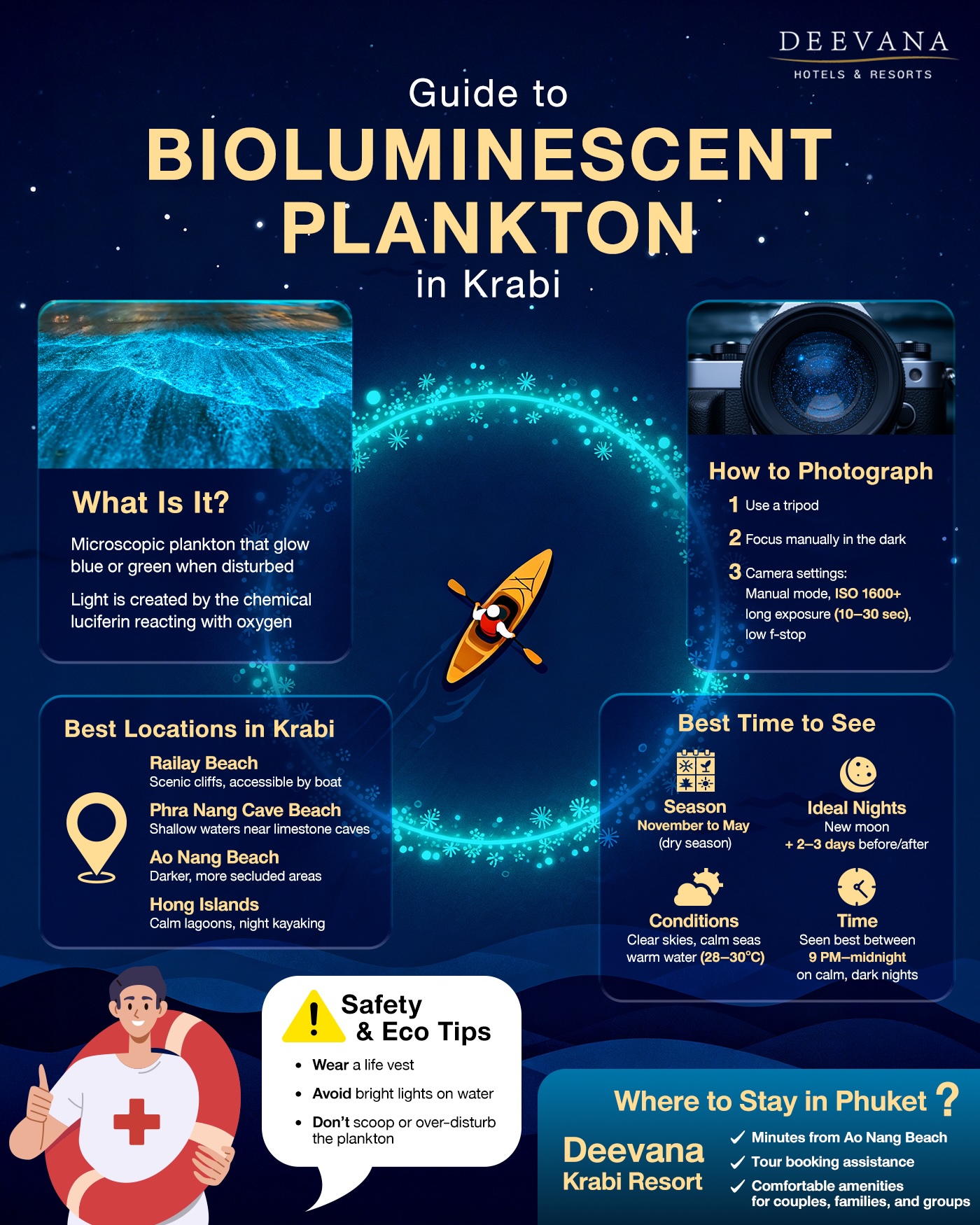
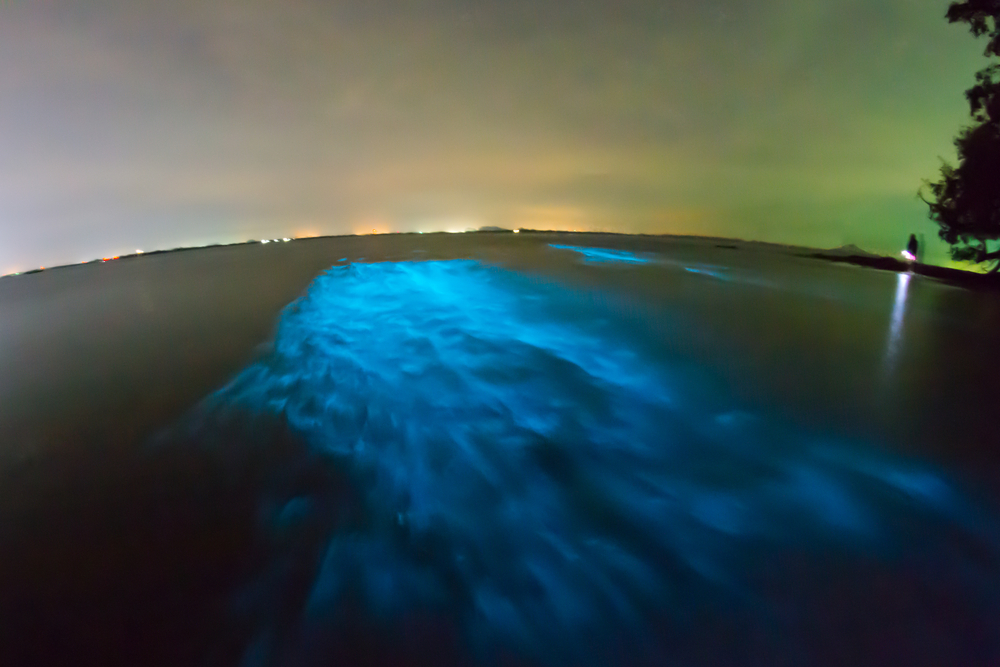
Bioluminescent plankton are microscopic marine organisms that emit light when disturbed, creating a glowing blue or green effect in the water. This bioluminescence happens when the plankton release a chemical called luciferin, which reacts with oxygen to produce light, as a natural defense mechanism against predators.
The glow is best seen on moonless nights when the sea is calm and the skies are dark, typically between 9 pm and midnight. The plankton sparkles as waves crash or swimmers move through the water, creating a captivating, magical effect.
When to Go for the Best Experience
The best time to see bioluminescent plankton is during the high season from November to May, when the skies are clear and the seas are calm. Plan your trip around the new moon, 2-3 days before or after, as darker nights provide the best visibility.
While sightings are possible throughout the year, visibility is highest in the dry season. Warm shallow water at 28-30°C water temperature is ideal for glow conditions. Avoid stormy weather or windy conditions, as waves can disperse plankton and reduce the brightness of the bioluminescent plankton.
Where to See Bioluminescent Plankton in Thailand
Krabi is among the top destinations to see bioluminescent plankton in Thailand, thanks to its calm bays, clear waters, and easy access from the mainland. Beaches or bays that are away from bright artificial lighting give you the best chance to see the glow.
Railay Beach
Accessible only by boat, Railay Boat is one of Krabi’s most scenic destinations, famous for its limestone cliffs and soft white sands. Bioluminescent plankton can make the shorelines glow at night, especially after periods of calm weather. Nighttime boat tours often stop here to let visitors witness the glowing surf.
Phra Nang Cave Beach
Next to Railay, Phra Nang Cave Beach offers another spectacular setting for seeing the bioluminescent plankton in Krabi. You can spot the glow in the shallow water near the limestone caves as you walk or wade.
Ao Nang Beach
Near Deevana Krabi Resort, Ao Nang Beach occasionally displays faint blue lights along its shoreline. While not as bright as remote beaches, it’s ideal for travelers who prefer convenience, as you can see the glow without leaving town. If you’re staying in Ao Nang, ask local guides or your hotel about bioluminescent plankton tours that depart directly from the beach.
Hong Islands
A popular destination for day and night kayaking, the Hong Islands are known for their calm lagoons and shallow bays. The protected waters make it easy to spot glowing plankton up close as you paddle. Many nighttime tours from Ao Nang or Kong Muang include stops here, combining a kayak experience with a glowing sea display under the stars.
Koh Ya Wa Sam, Poda Island, and Koh Ma Tang Ming
These smaller islands near Krabi are excellent for bioluminescent beach tours. The best way to experience them is by joining a night island-hopping trip or hiring a private long-tail boat. The secluded waters ensure minimal light pollution, creating optimal viewing conditions.
How to See Bioluminescent Plankton in Krabi, Thailand
The most immersive way to experience glowing plankton is through organized night tours. Popular options include night kayaking tours, where you can paddle through the Hong Islands for a quiet, glowing experience, or swimming excursions where you join long-tail boat tours from Ao Nang or Railay and swim among the glowing waters. You can also charter private boat tours for a customized itinerary.
Environmental and Safety Tips
- Gently move your hands or feet in the water, or wait for waves to crash on the beach to create the glowing effect
- Avoid touching or scooping plankton so as not to cause too much disruption
- Don’t use flashlights directly on the water, as this can reduce visibility
- Bring eco-safe insect repellent, a waterproof bag for your valuables, and non-slip water-friendly footwear
- Wear a life vest and follow your guide’s instructions for your safety and environmental protection
How to Capture Bioluminescent Plankton
To photograph the glow, use a smartphone or camera with manual settings, high ISO (1600 or 3200), and long exposure with a 10-or 30-second shutter speed to capture the movement and glow. Set the aperture to the widest setting, which is the lowest f-number to let in the most light. Switch to manual focus and adjust the focus until the glow is sharp. Use a sturdy tripod to keep your camera or phone still during long exposure and prevent blurry photos.
Why Stay at Deevana Krabi Resort
Located just a few minutes from Ao Nang Beach, Deevana Krabi Resort offers comfort, relaxation, and easy access to Krabi’s natural attractions, including night tours to see bioluminescent plankton. Featuring contemporary accommodations and complete facilities, such as free-form swimming pools with pool bars, a traditional Thai spa, and an all-day dining restaurant.
The resort’s helpful staff can assist with arranging your night kayak or Krabi island tours so you can make the most of your experience. After exploring Krabi’s natural attractions, guests can rest and relax amidst lush and tranquil surroundings. Book your stay at Deevana Krabi Resort for an unforgettable Krabi adventure.
Frequently Asked Questions
Can you see bioluminescent plankton in Krabi all year round?
Yes, but the best visibility is from November to May, during the calm, dry months.
Do I need to join a tour to see the bioluminescent plankton?
It’s highly recommended. While you might get lucky and see a faint glow from beaches like Railay on a very dark night, dedicated boat tours will take you to darker, more concentrated areas away from light pollution, offering a much more spectacular experience.
Is it safe to swim in glowing plankton?
It’s completely safe to swim in. The glow is caused by a harmless natural reaction, not chemicals, and is completely safe for humans.
Why can’t I always see the glow?
Because it’s a natural event, sightings are never 100% guaranteed. Sightings depend on moonlight, tides, and plankton density — darker nights with calm seas increase your chances.
Can I photograph bioluminescent plankton?
Yes, but you’ll need a long-exposure camera or manual settings to capture the glow properly.
Which beach is best for first-timers in Krabi?
Railay Beach and Hong Islands are the most recommended for bioluminescent plankton in Krabi, combining accessibility and strong visibility.
Are children allowed on night tours?
Yes. Most tours are family-friendly; however, verify age restrictions and safety instructions with the operator.
References:
- Where to See the World’s Brightest Bioluminescent Tides. Retrieved on 20 October 2025 from https://www.nationalgeographic.com/travel/article/where-to-see-the-worlds-brightest-bioluminescent-tides
- How to Capture Blue Plankton Photos on iPhone or Camera. Retrieved on 20 October 2025 from https://krabinature.com/how-to-capture-blue-plankton-photos-on-iphone-or-camera/